Chapter 8: ChatGPT for Writing and Communication
Writing with ChatGPT should not mean surrendering your voice. It should mean making your thinking clearer, faster, more audience-aware, and easier to review. Humans remain responsible for truth, tone, relationship consequences, promises, and final approval.
8.1 Writing With ChatGPT Without Losing Your Voice
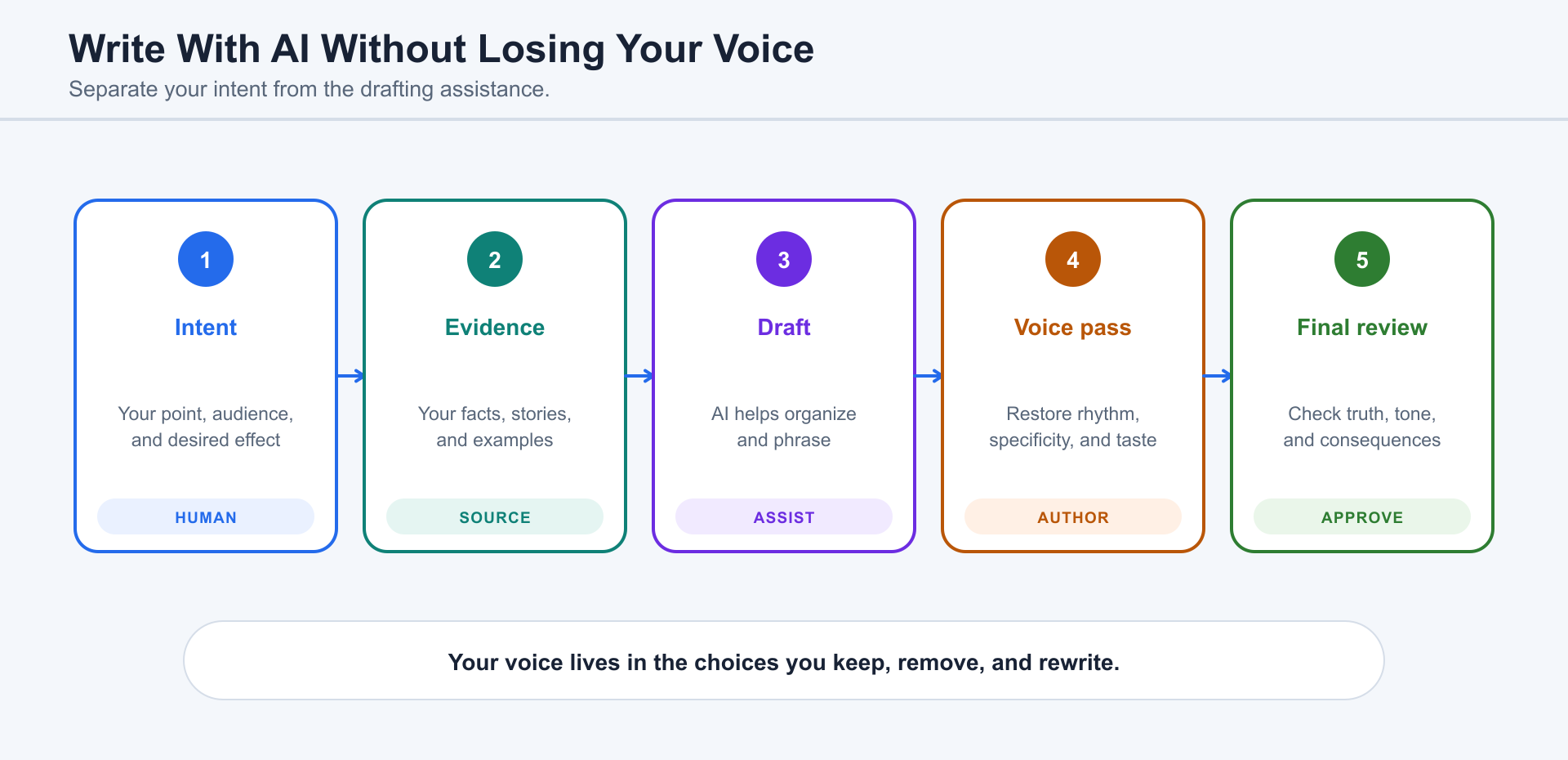
Section titled “8.1 Writing With ChatGPT Without Losing Your Voice”The best way to keep your voice is to give ChatGPT examples and boundaries. Show it writing you like, writing you have sent before, phrases you use, phrases you avoid, and the relationship with the reader. Ask it to preserve your stance while improving structure, clarity, and flow. This is different from asking it to “make this sound professional,” which often produces generic corporate language.
A strong request is: “Here are three examples of my writing. Keep the directness and warmth, but make this draft clearer for a client. Do not add claims I did not make.” ChatGPT can produce several versions, but the human should choose the version that still feels honest.
8.2 Turning Rough Notes Into Shareable Drafts
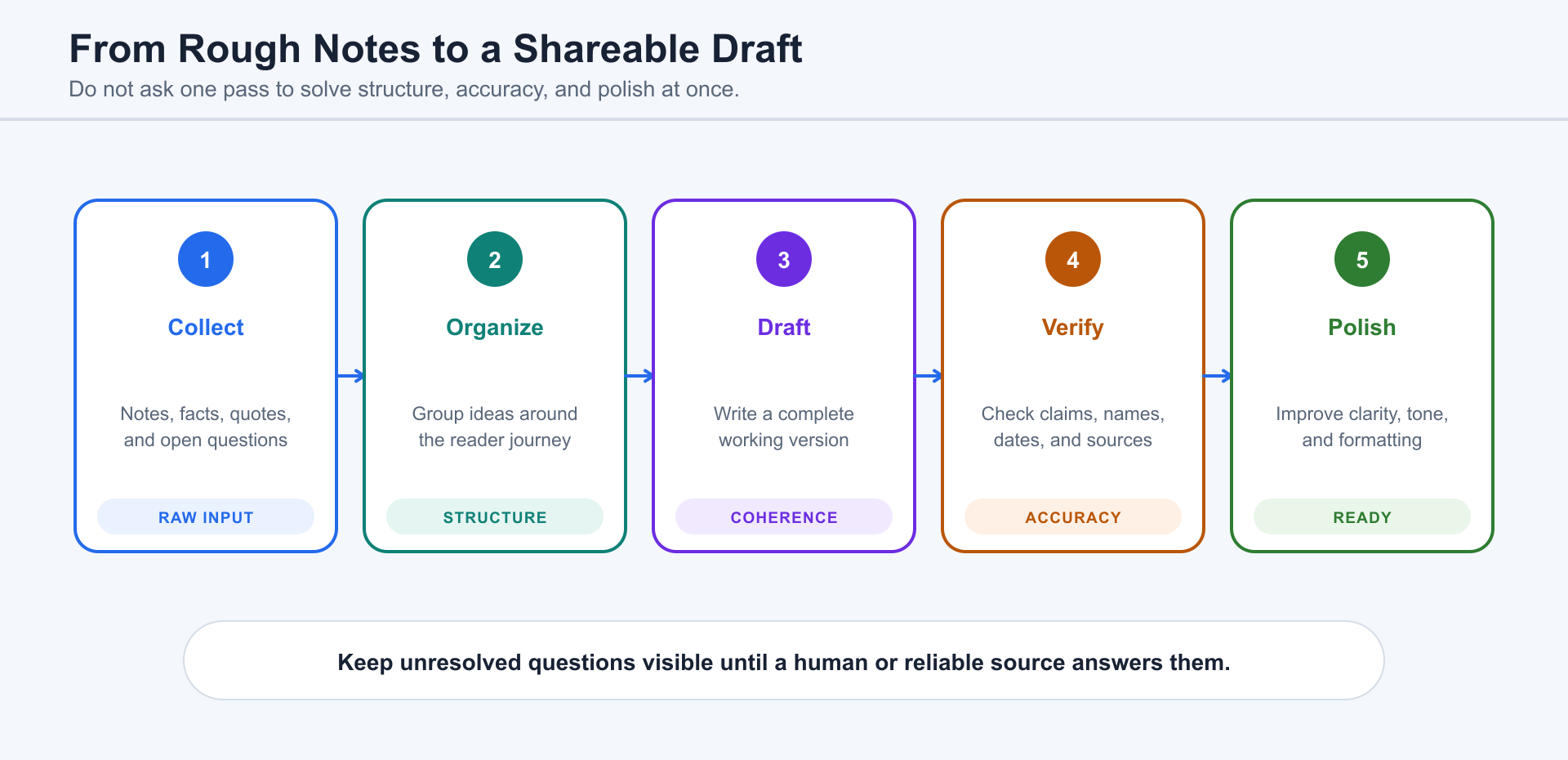
Section titled “8.2 Turning Rough Notes Into Shareable Drafts”Rough notes often contain the right material in the wrong order. They may mix decisions, questions, emotional reactions, background facts, and future tasks. ChatGPT can separate those layers and turn them into a memo, email, report, proposal, blog post, or meeting summary.
The human should provide the audience and desired action. “Summarize this” is weaker than “Turn these notes into a client update that explains the decision, the reason, the timeline, and the next step.” If the human is unsure what the message should be, ChatGPT should ask: Who is reading this? What do they already know? What should they do after reading? What must not be misunderstood?
8.3 Collaborating With Editors, Teammates, and Clients
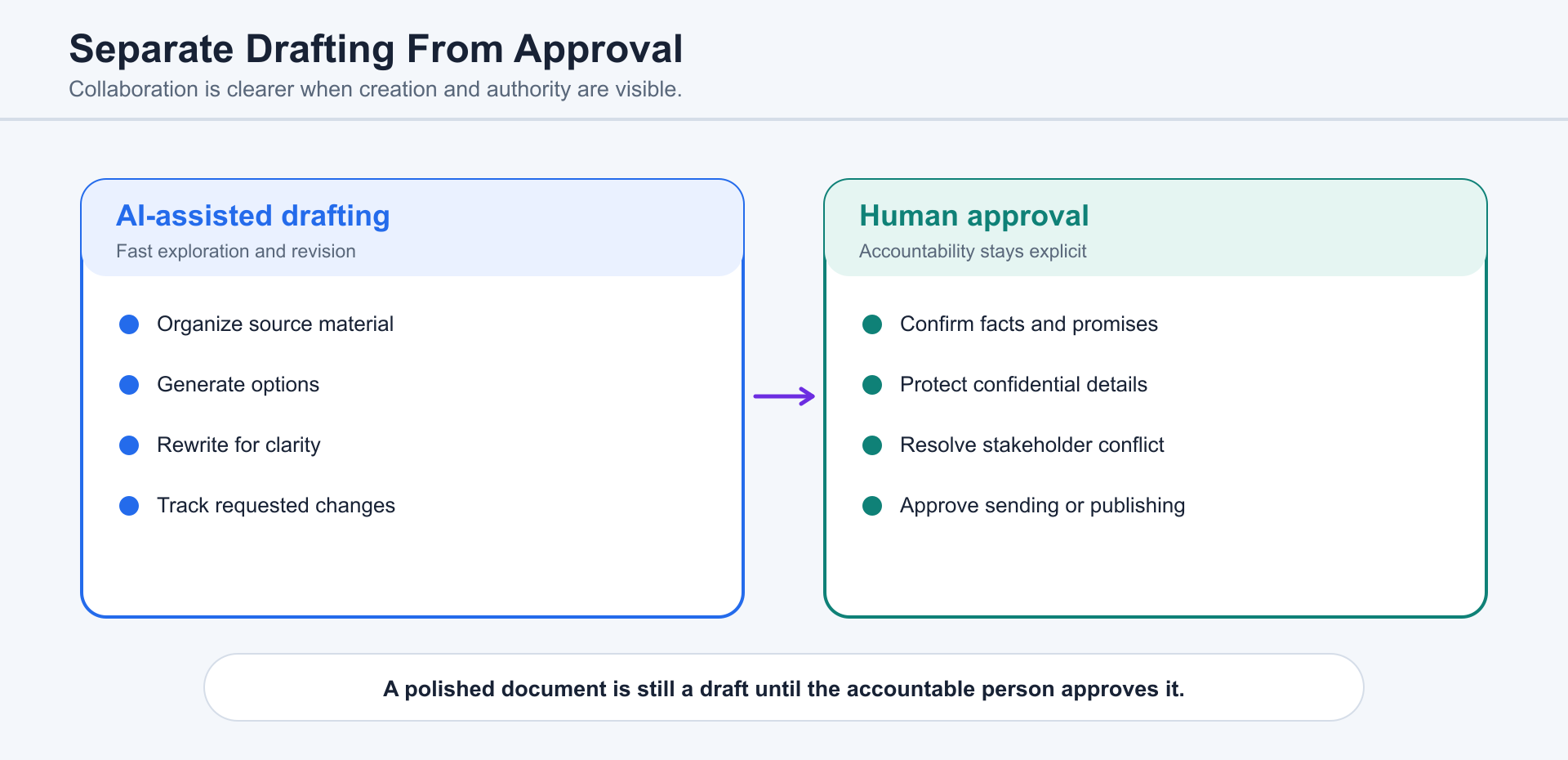
Section titled “8.3 Collaborating With Editors, Teammates, and Clients”Writing is often collaborative. ChatGPT can help merge feedback from editors, teammates, clients, legal reviewers, and leadership. It can identify conflicting comments, convert vague feedback into revision tasks, propose a response to reviewers, and keep track of unresolved questions.
The human role is to decide which feedback to accept. A client may ask for a stronger claim that creates legal risk. A teammate may prefer a tone that does not fit the audience. An editor may improve clarity but remove an important nuance. ChatGPT can surface the tradeoff, but a human must make the judgment.
8.4 Emails, Reports, Proposals, and Memos
Section titled “8.4 Emails, Reports, Proposals, and Memos”Different formats carry different responsibilities. Emails should make the action, owner, and timeline clear. Reports should distinguish evidence, interpretation, and recommendation. Proposals should explain the problem, scope, value, timeline, cost, assumptions, and next step. Memos should support decisions by presenting context, options, risks, and a recommendation.
ChatGPT can maintain format discipline. Ask it to produce a short version, a detailed version, and an executive version. Ask it to list claims that need evidence. Ask it to mark promises, dates, prices, names, and attachments for human review.
8.5 Tone, Audience, and Approval Workflows
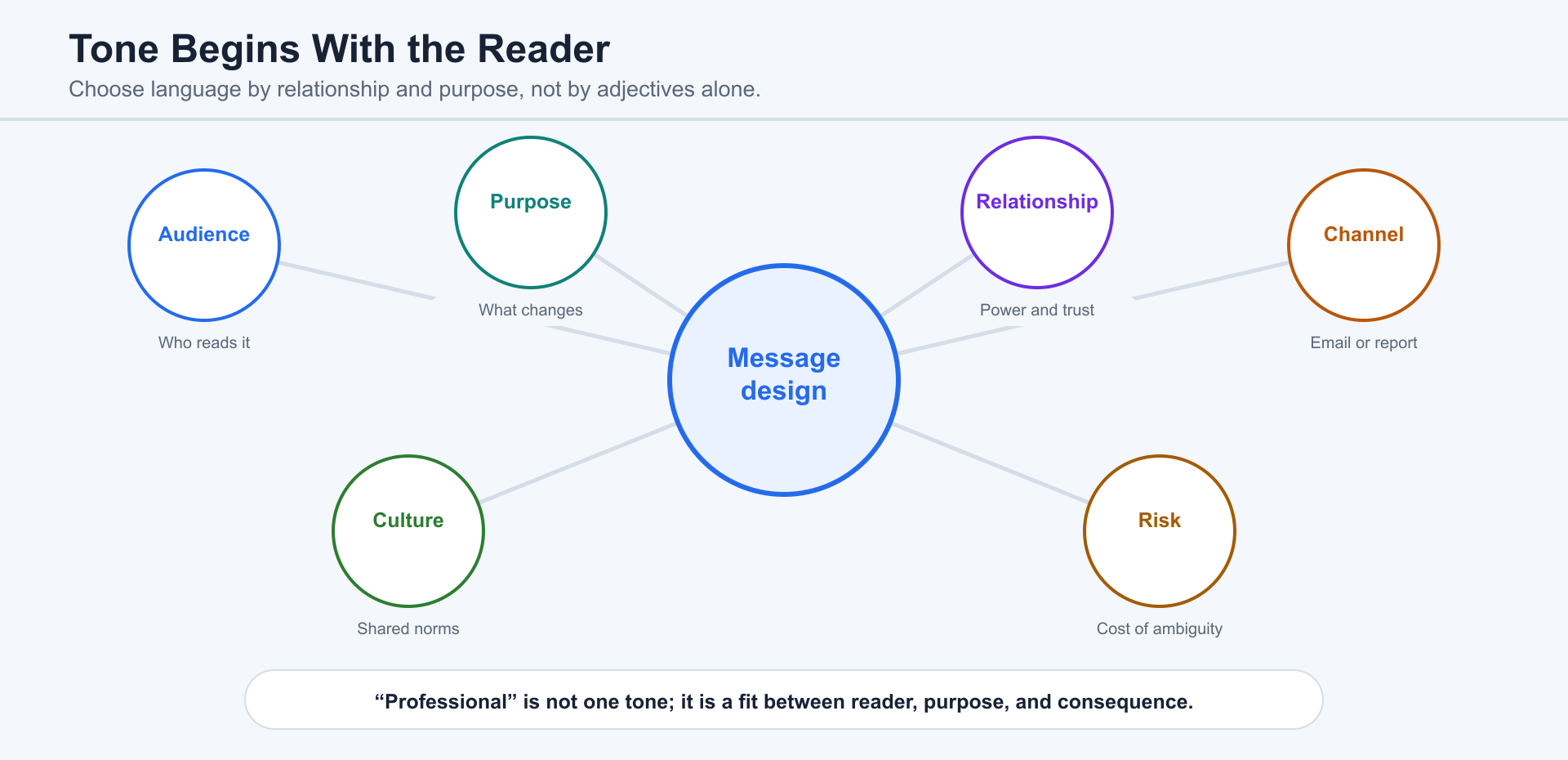
Section titled “8.5 Tone, Audience, and Approval Workflows”Tone is not decoration. It is relationship management. A message to a frustrated customer, a project update to a manager, a sales proposal, a board memo, and a note to a friend should not sound the same. ChatGPT can generate direct, warm, formal, brief, diplomatic, or persuasive variants, but the human must decide which tone fits the relationship.
For approval workflows, ChatGPT can prepare drafts, red flags, reviewer notes, and version summaries. Before sending external writing, humans should check whether the organization requires legal, finance, manager, brand, or client approval. The smoother the AI draft sounds, the more important it is to inspect the promises inside it.
8.6 Bilingual and Cross-Cultural Communication
Section titled “8.6 Bilingual and Cross-Cultural Communication”Bilingual communication is not only translation. It is adaptation. A sentence that sounds respectful in Chinese may sound indirect in English. A direct English request may sound abrupt in another culture. ChatGPT can help preserve intent while adjusting structure, politeness, formality, and cultural expectations.
Humans should review names, titles, idioms, legal terms, numbers, dates, and culturally sensitive language. Ask ChatGPT to explain the difference between a literal translation and a localized version. For important messages, keep both versions visible so a bilingual human can confirm that the meaning, not just the words, survived.
8.7 Review Checklists for Important Writing
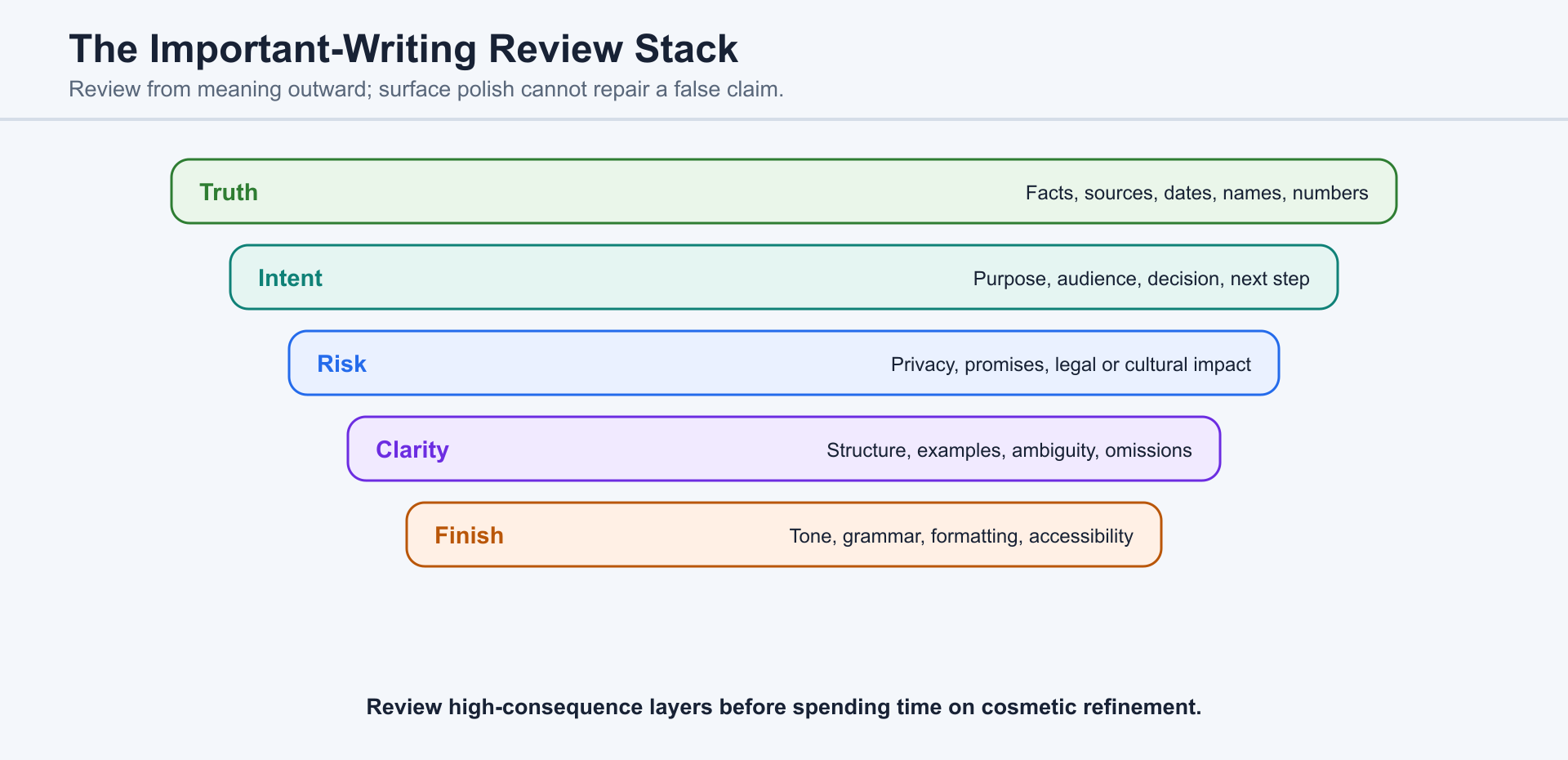
Section titled “8.7 Review Checklists for Important Writing”Important writing deserves a checklist. Check facts, dates, names, numbers, links, attachments, tone, audience, confidentiality, promises, deadlines, owners, and approvals. Check whether the message says what is known, what is uncertain, and what happens next.
ChatGPT can run a pre-send review: “List any factual claims, risky promises, missing context, ambiguous requests, tone issues, and private information in this draft.” Humans should still read the final message slowly. If the writing affects money, employment, legal exposure, customer trust, health, safety, or reputation, do not rely on an AI summary alone.
8.8 Building Repeatable Writing Templates
Section titled “8.8 Building Repeatable Writing Templates”High-frequency writing should become templates. Customer follow-ups, weekly updates, proposals, support replies, meeting summaries, launch announcements, recruiting outreach, and internal memos all benefit from reusable structure. ChatGPT can create a template library with placeholders, tone notes, approval steps, and examples.
Templates should not make communication robotic. They should protect quality by making sure the basics are never forgotten: context, decision, evidence, action, owner, deadline, and review. The human still personalizes the message for the reader and situation.
8.9 What Humans Should Always Review
Section titled “8.9 What Humans Should Always Review”Humans should always review truth, tone, commitments, privacy, and judgment. ChatGPT may write confidently about facts that need verification. It may soften a hard message too much or make a gentle message too forceful. It may accidentally turn a possibility into a promise.
The final question should be: “Would I stand behind this if the reader quoted it back to me?” If the answer is no, keep editing. ChatGPT can improve language, but the human owns the relationship and the responsibility.
Collaboration Pattern
Humans provide intent, audience, relationship context, voice, and approval boundaries. ChatGPT organizes, drafts, revises, translates, summarizes, and checks. When the human knows the message, ChatGPT edits. When the human is choosing between messages, ChatGPT creates alternatives. When the human does not know what to say, ChatGPT asks what the reader should know, feel, decide, and do.
Field Note
The biggest writing failure is not “AI style.” It is missing context. If ChatGPT does not know the relationship, audience, risk, or desired action, it will fill the gaps with generic language. The workaround is to provide a writing sample, the reader, the desired outcome, and the things the draft must not say.
Review Checklist
Inspect facts, dates, numbers, names, links, attachments, tone, promises, privacy, approvals, and next steps. For bilingual writing, inspect meaning rather than literal word matching. For external communication, verify that every commitment is intentional.
Handoff Prompt
“Turn these notes into a draft for ____. The reader already knows ____. I want them to ____. The tone should be ____. Keep my voice: ____. Do not say or imply ____. First ask any missing questions, then give me a clear draft, a shorter version, and a risk checklist.”