Chapter 11: ChatGPT for Creativity
Creativity with ChatGPT is exploration, not replacement. ChatGPT can generate directions, variations, scripts, moodboards, briefs, and production plans. Humans remain responsible for taste, meaning, cultural judgment, emotional truth, and final selection.
11.1 Creativity as Exploration, Not One Perfect Answer
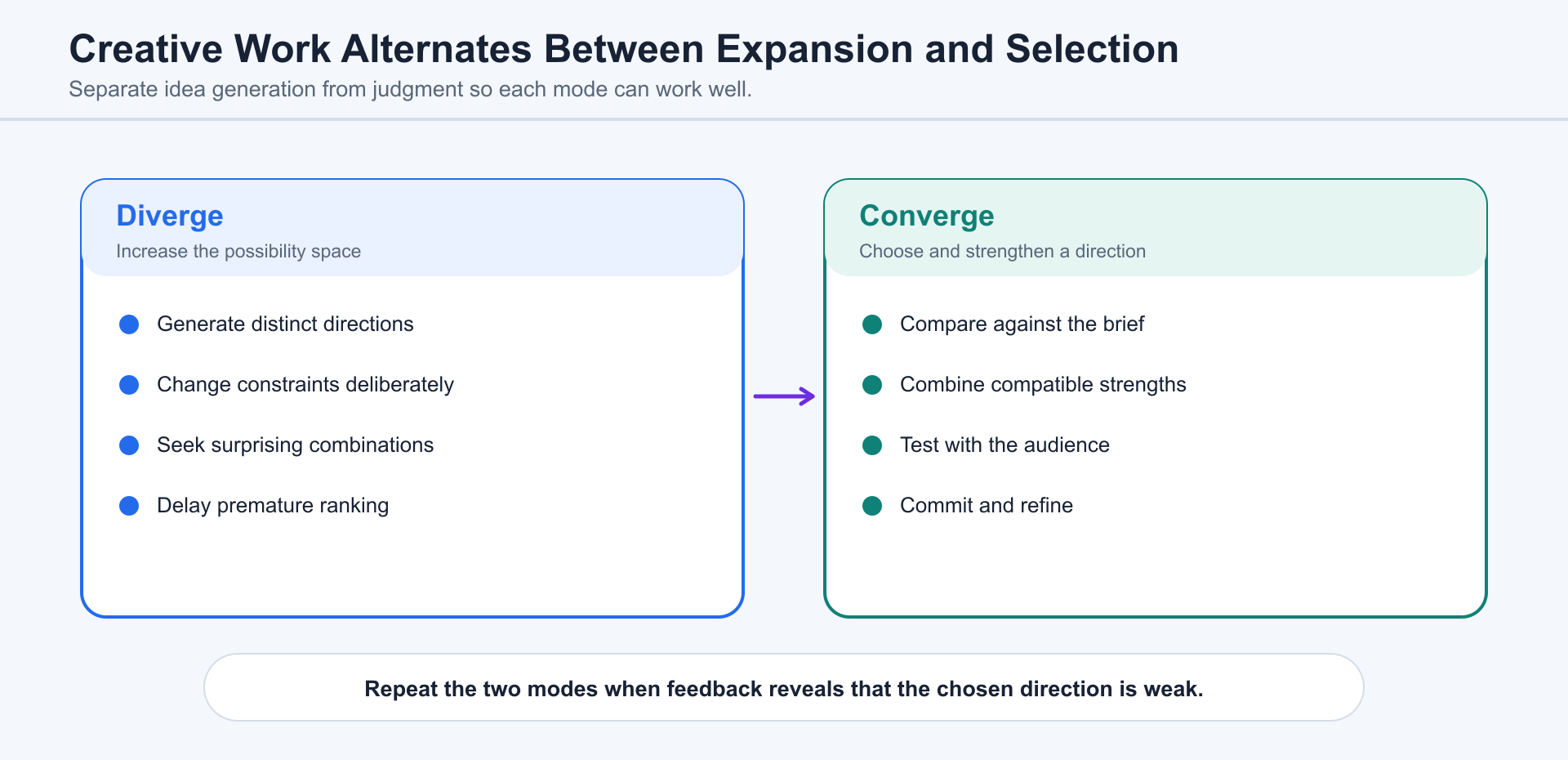
Section titled “11.1 Creativity as Exploration, Not One Perfect Answer”Creative work rarely starts with the perfect idea. It starts with many imperfect directions. ChatGPT is useful because it can quickly generate territories: safe, strange, elegant, funny, premium, raw, educational, cinematic, playful, minimalist, or experimental. The human then reacts, combines, rejects, and sharpens.
A good creative prompt asks for variety and reasoning. “Give me ten campaign directions, each with audience, emotional promise, visual language, risk, and why it might fail.” This gives the human material to judge rather than a single answer to accept.
11.2 Working With ChatGPT as a Creative Partner
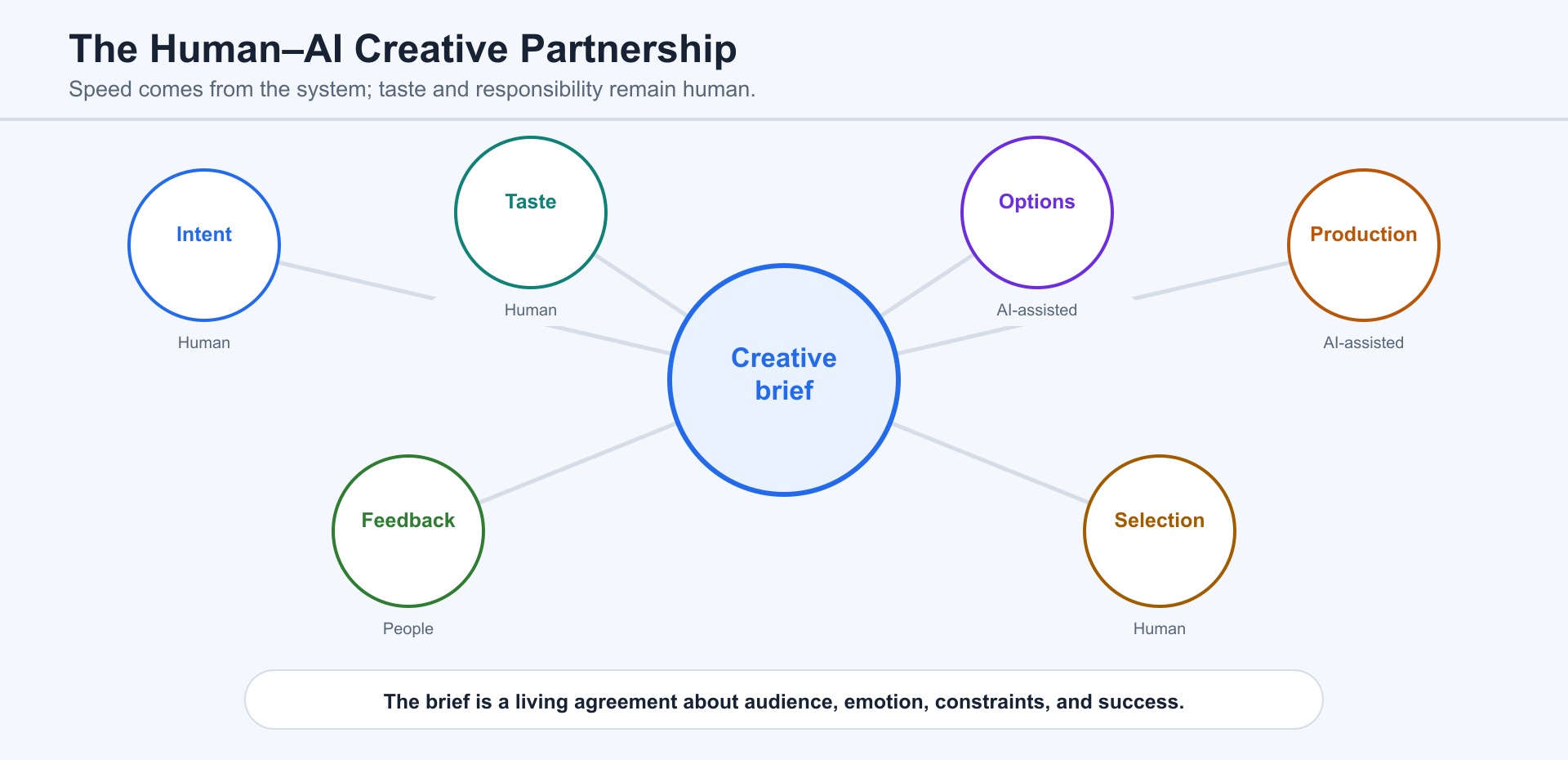
Section titled “11.2 Working With ChatGPT as a Creative Partner”A creative partner does more than obey. ChatGPT can challenge clichés, ask about audience, identify overused ideas, propose constraints, and help combine directions. The human can respond with taste: “This is too generic,” “Make it quieter,” “Keep the structure but make the emotional center sharper,” or “Give me a version that feels less like advertising.”
This is equal collaboration. The human is not passive, and ChatGPT is not the final judge. The useful loop is prompt, generate, react, refine, compare, and select.
11.3 Brainstorming Names, Concepts, and Directions
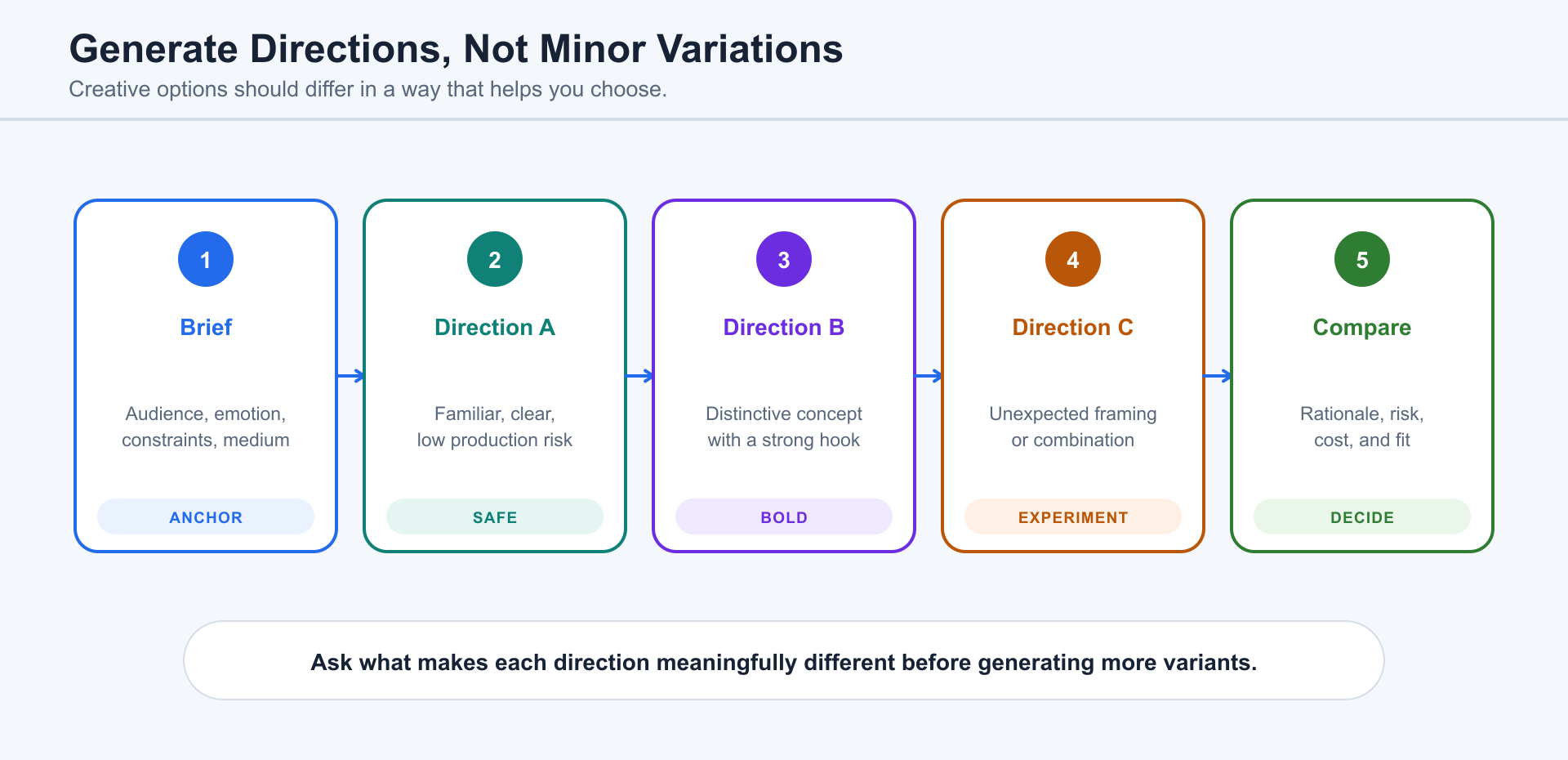
Section titled “11.3 Brainstorming Names, Concepts, and Directions”Naming and concept work need criteria. A name may be memorable but hard to pronounce, clever but too narrow, available but emotionally flat, or beautiful but culturally risky. ChatGPT can generate names, taglines, campaign territories, content series, product concepts, character ideas, and positioning statements, then score them against criteria.
Humans should review meaning, sound, cultural associations, trademark risk, domain availability, audience fit, and long-term flexibility. ChatGPT can widen the search, but humans choose what feels right and responsible.
11.4 Stories, Scripts, Briefs, Images, and Moodboards
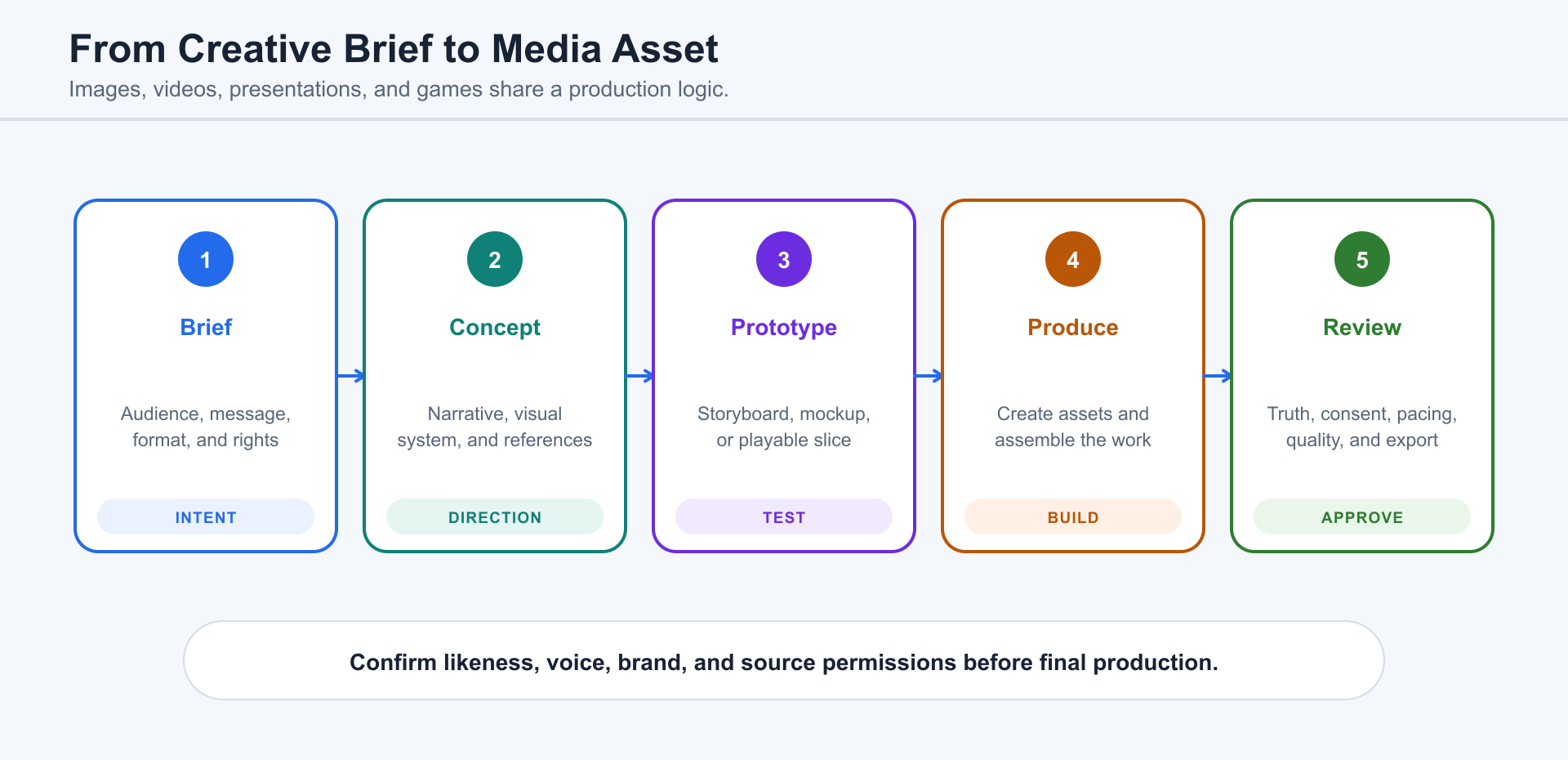
Section titled “11.4 Stories, Scripts, Briefs, Images, and Moodboards”ChatGPT can help create story outlines, scripts, scene lists, visual briefs, shot lists, interview questions, image prompts, style references, and moodboard directions. It can translate an abstract mood into concrete choices: setting, light, color, lens, pacing, music, typography, and motion.
HeyGen is valuable when the creative output needs a presenter, avatar, spokesperson, training host, multilingual voice, or fast explainer. HyperFrames by HeyGen is valuable when a team wants to turn web pages, product UI, captions, data, and brand elements into video-like motion. Remotion is valuable when creative video must be generated through code, reused, localized, personalized, or connected to data. These tools are production accelerators, not substitutes for creative judgment.
11.5 Getting Feedback From Humans, Not Just AI
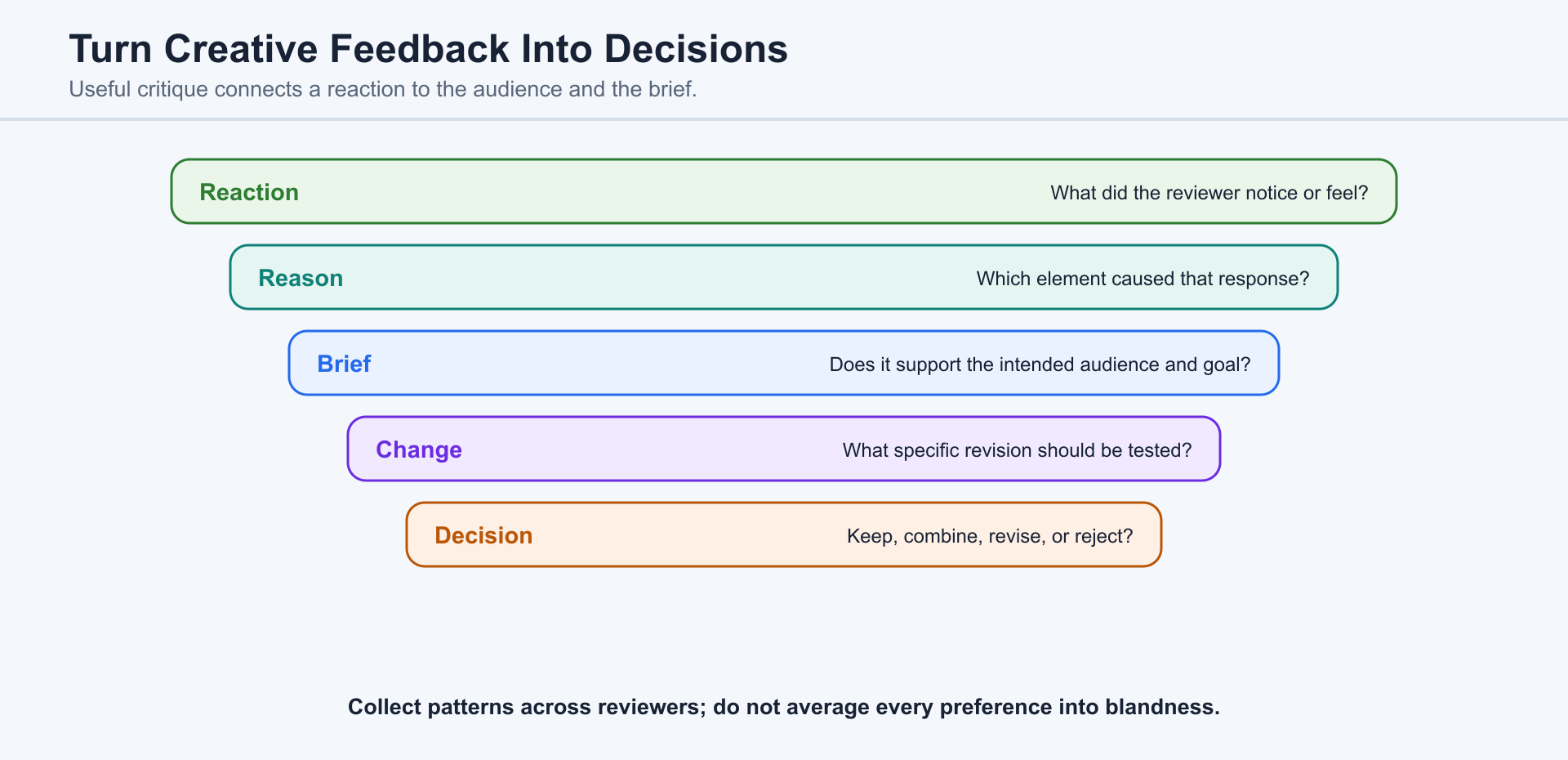
Section titled “11.5 Getting Feedback From Humans, Not Just AI”AI feedback is useful early, but real audience feedback is different. People may react to a story, image, name, or video in ways a model cannot predict. ChatGPT can prepare feedback questions, summarize responses, identify patterns, and propose revisions.
Humans should decide whose feedback matters. A client, target user, editor, designer, and random viewer may all see different problems. The goal is not to obey every opinion. The goal is to understand the pattern behind the reaction.
11.6 Revising, Combining, and Selecting Ideas
Section titled “11.6 Revising, Combining, and Selecting Ideas”Strong creative work often comes from revision and combination. One concept may have the best emotional promise. Another may have the best visual world. A third may have the best title. ChatGPT can build comparison matrices, combine strengths, remove repetition, and create revised options.
The human should set selection criteria before choosing: audience fit, originality, clarity, feasibility, brand fit, risk, and emotional power. Without criteria, the team may choose the idea that is easiest to explain rather than the idea that is strongest.
11.7 Creative Constraints and Taste
Section titled “11.7 Creative Constraints and Taste”Constraints are not enemies of creativity. Budget, time, format, brand rules, platform size, performer availability, software access, and delivery format can make ideas sharper. ChatGPT can generate within constraints and explain which ideas are feasible.
Taste remains human. Taste comes from exposure, comparison, lived experience, cultural awareness, and practice. ChatGPT can help articulate taste, but it should not define it alone. Ask ChatGPT to compare references and extract principles, then decide which principles you actually believe in.
11.8 Presentations, Videos, Campaigns, and Games
Section titled “11.8 Presentations, Videos, Campaigns, and Games”ChatGPT can help create presentation outlines, speaker notes, campaign briefs, video scripts, shot lists, game design documents, character arcs, level concepts, and production plans. It can also break creative work into tasks for design, writing, editing, animation, sound, and review.
For video-heavy creative work, HeyGen can produce presenter-led drafts, onboarding clips, customer education videos, or multilingual explainers. HyperFrames by HeyGen can create motion-rich video assets from web-like layouts and branded components. Remotion can generate coded video templates for campaigns that need many variants by language, customer, date, market, or data source. For games, ChatGPT should help with concepts, rules, prototypes, and test plans, while humans judge fun through playtesting.
11.9 Keeping Human Judgment in Control
Section titled “11.9 Keeping Human Judgment in Control”The closer creative work gets to publication, the more human judgment matters. Review whether the work is truthful, respectful, original, culturally aware, legally safe, emotionally effective, and aligned with the brand. ChatGPT may produce something polished that is still wrong for the moment.
Humans should also review ownership and consent. Images, voices, likenesses, brand marks, and style references may create ethical or legal concerns. Creative acceleration should not erase responsibility.
Collaboration Pattern
Humans provide taste, intent, cultural awareness, constraints, and final selection. ChatGPT generates options, asks questions, organizes feedback, drafts briefs, and creates production plans. When the human knows the direction, ChatGPT expands it. When the human is choosing, ChatGPT compares alternatives. When the human is stuck, ChatGPT asks about audience, emotion, references, constraints, and what the human dislikes.
Field Note
The common creative mistake is accepting the first complete idea. Completeness feels persuasive. The workaround is to require multiple directions, critique each direction, combine the best parts, and get human feedback before committing.
Review Checklist
Check audience fit, originality, brand fit, feasibility, cultural sensitivity, consent, copyright risk, emotional impact, and production plan. For videos made with HeyGen, HyperFrames by HeyGen, or Remotion, review script truth, voice/likeness permissions, subtitles, localization, pacing, and export requirements.
Handoff Prompt
“Act as my creative partner for ____. The audience is ____. The emotional goal is ____. The constraints are ____. References I like are ____. Things I dislike are ____. Ask me clarifying questions first, then propose several creative directions with rationale, risks, production needs, and selection criteria.”